Quick facts
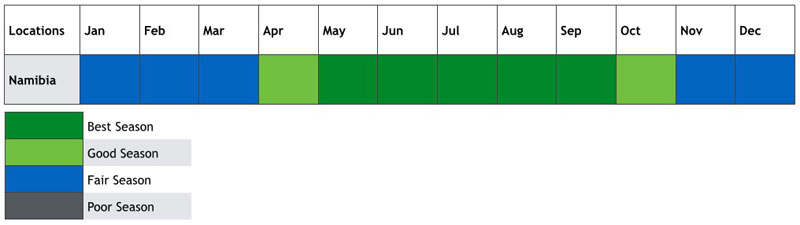
Best time to go: June to October (All parks)
High Season: July to October (Will not feel too crowded, except for Etosha and the main access road in Namib-Naukluft)
Low Season: December to April (All parks are very quiet)
Best Weather: April and May (Moderate temperatures, little to no rainfall, green landscape)
Worst Weather: November to February (Very hot)
May to October – Dry Season – Winter
- There is less vegetation and wildlife congregates around rivers and waterholes, making animals easier to spot. It is the best time to visit Etosha.
- There are no clouds, it’s sunny and there is virtually no rain.
- Even though most tourists visit during the dry season, the parks still don’t feel crowded, except for Etosha.
- It gets cold at night and in the mornings. It’s advised to pack warm winter clothing during June, July and August for the cold morning game drives.
October to April – Wet Season – Summer
- After the rains, the scenery is greener and the rates are lower, because it’s low season.
- This is the time of the year you can see newborn animals. Migratory birds are present and birding is at its best.
- Rains are mostly short showers in the afternoon and rarely have a real negative impact on your trip.
- It gets very hot from October to February.
- It’s more difficult to spot animals. This is especially true for Etosha. For wildlife, it’s recommended to visit Etosha in the dry season.